The methane pathway offers a practical route for shipping’s energy transition.
The shipping industry must maximise the potential of lower-carbon fuels available today while preparing for future solutions to meet the industry’s 2050 net-zero emissions ambition.
The methane pathway offers an immediate, proven, and pragmatic solution that keeps the door open for future options. You’ll learn why and how:
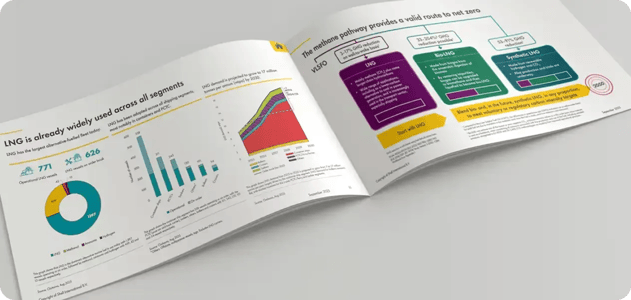

The methane pathway:
The report explores how liquefied methane fuels can support shipping’s transition toward lower lifecycle GHG emissions1. Starting with LNG and bio-LNG, and incorporating synthetic LNG as it becomes commercially viable.

Emissions performance:
Lifecycle emissions performance is examined across LNG, bio-LNG and synthetic LNG, alongside how blending these fuels can help meet voluntary or regulatory carbon-intensity targets.

Scalability and future readiness:
All liquefied methane fuels can be distributed via the existing and expanding LNG infrastructure and gas grid, enabling faster scale-up of bio- and synthetic LNG. Discover the role of infrastructure as a key enabler of emissions reduction.
Leverage actionable insights by downloading our report.

Get the report
Complete the form below and download a free digital copy of the methane pathway report.